
A New School of Charity Since 1582
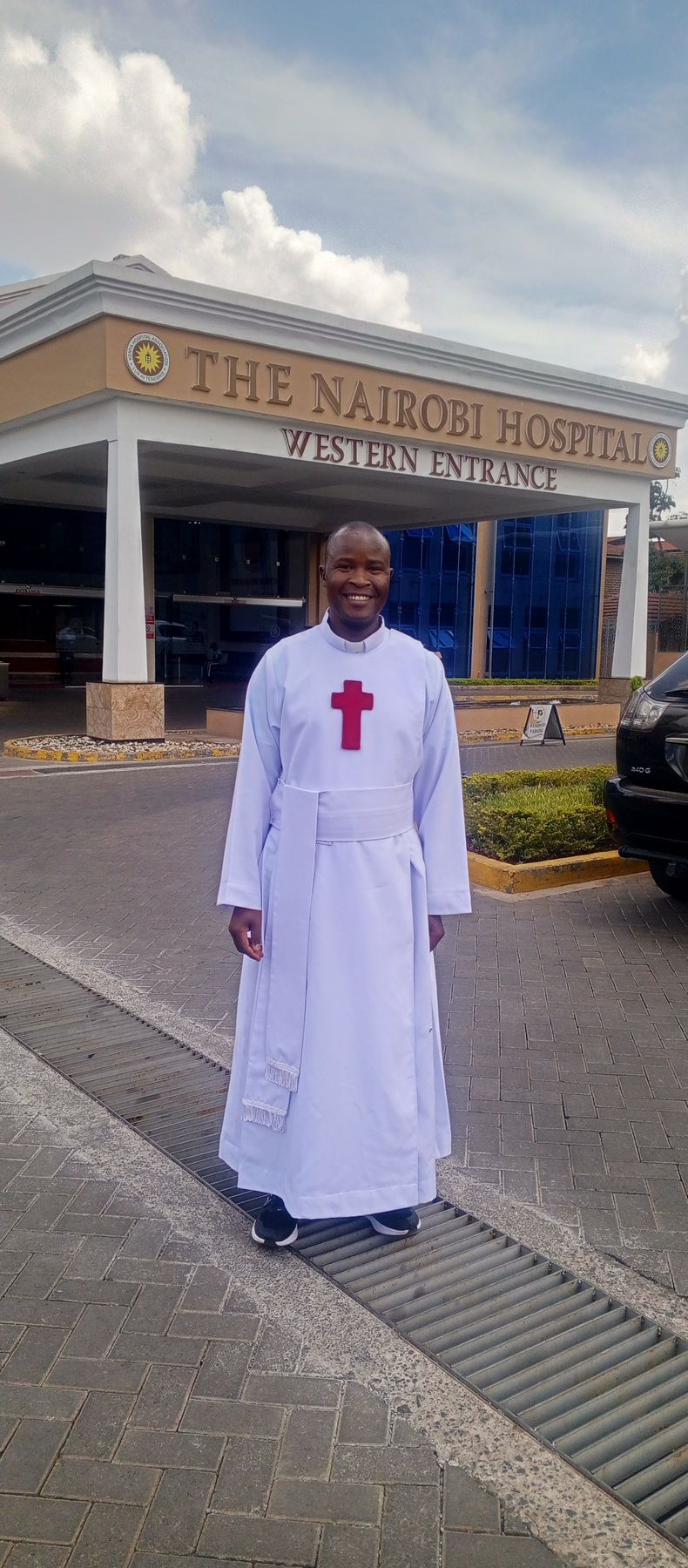
The Camillians or Clerics Regular Ministers to the Sick (Latin: Clerici Regulares Ministri Infirmorum) are a Roman Catholic religious order, founded in 1582 by St. Camillus de Lellis (1550–1614). A large red cross was chosen by the founder as the distinguishing badge for the members of the Order to wear upon their black cassocks, which was later adopted as the international symbol of medical care.
Our Vision, Mission and Values
Vision
Fullness of Life Amidst and Beyond Sickness of the Human Person.
Mission
We aspire to promote the holistic wellbeing of the sick and their families as we share with them Christ’s message of Love and Mercy.
Values
Camillians have a special calling from the Lord Jesus to serve the sick and the dying, even at the risk of their own lives. As we serve the sick and suffering, we embrace the following values and principles.
Human Dignity and Sanctity of Life
We hold life as sacred and a gift from God and commit to respect, listen and honour people as God’s children created in His image and likeness.
Rights of Every Sick, Suffering and Grieving Person
In serving the people of God, irrespective of their state of health, Camillians at all times will uphold their inalienable rights.
Social Justice and Equality
In the sphere of health, illness and suffering, Camillians promise to be fair, just and uphold equality of all in their services.
Stewardship
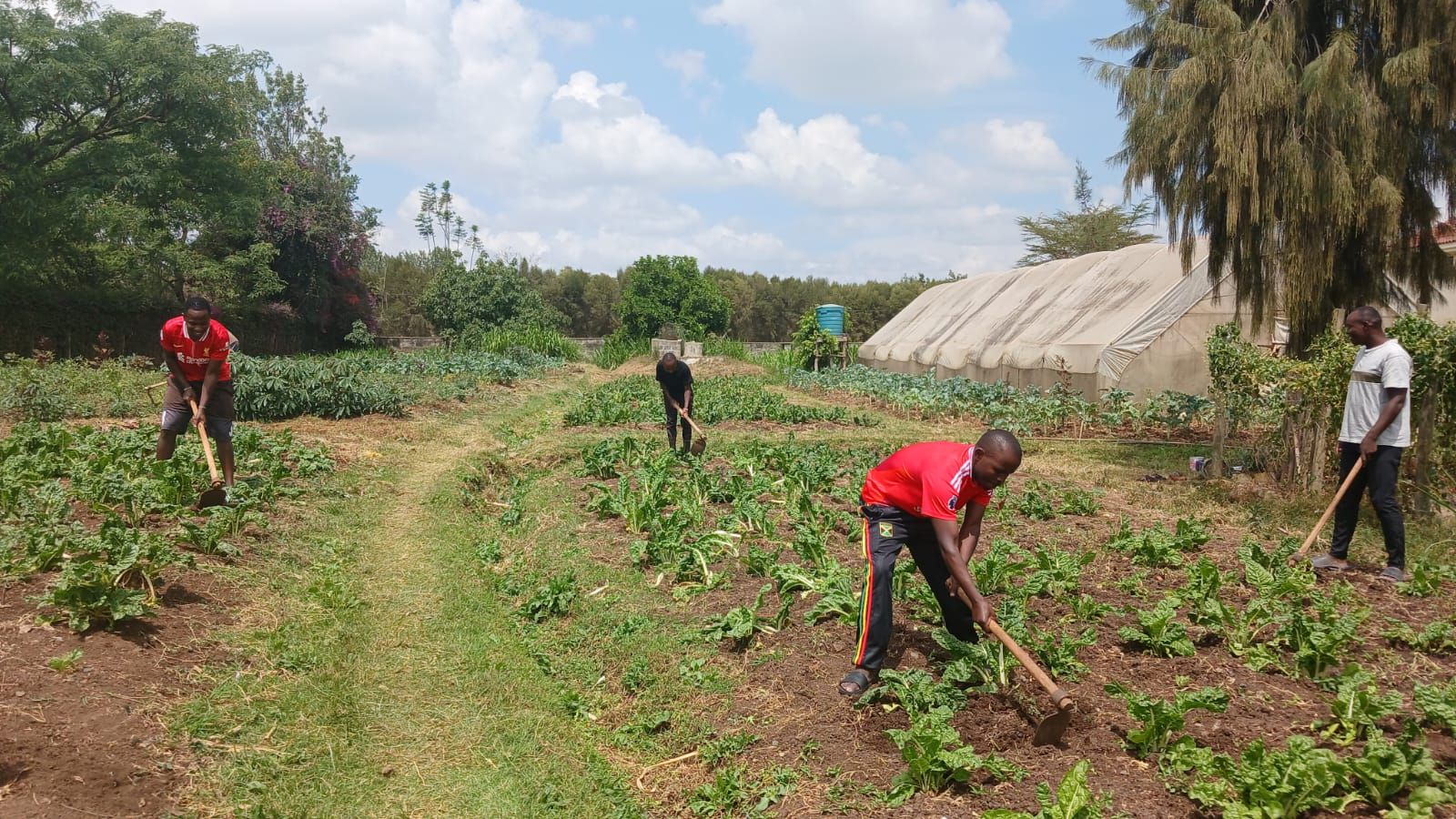
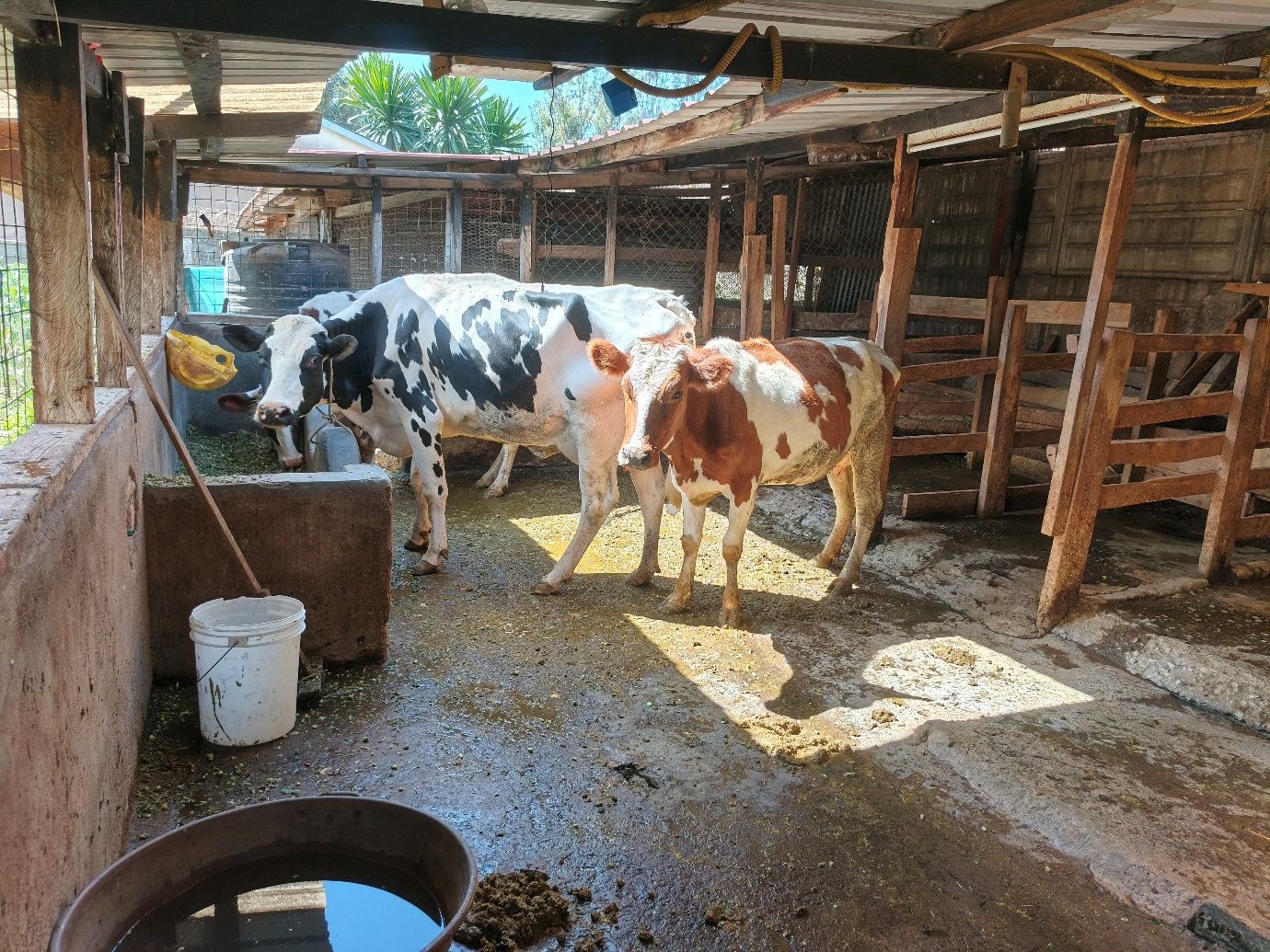
As a religious institution, we support the care of the environment and resources entrusted to us.
- Compassion
- Mercy
- Healing
- Hope
- Charity
- Service
- Compassion
- Mercy
- Healing
- Hope
- Charity
- Service
The Story of St. Camillus de Lellis
From soldier and gambler to patron of the sick: the life that began the Camillian Order.
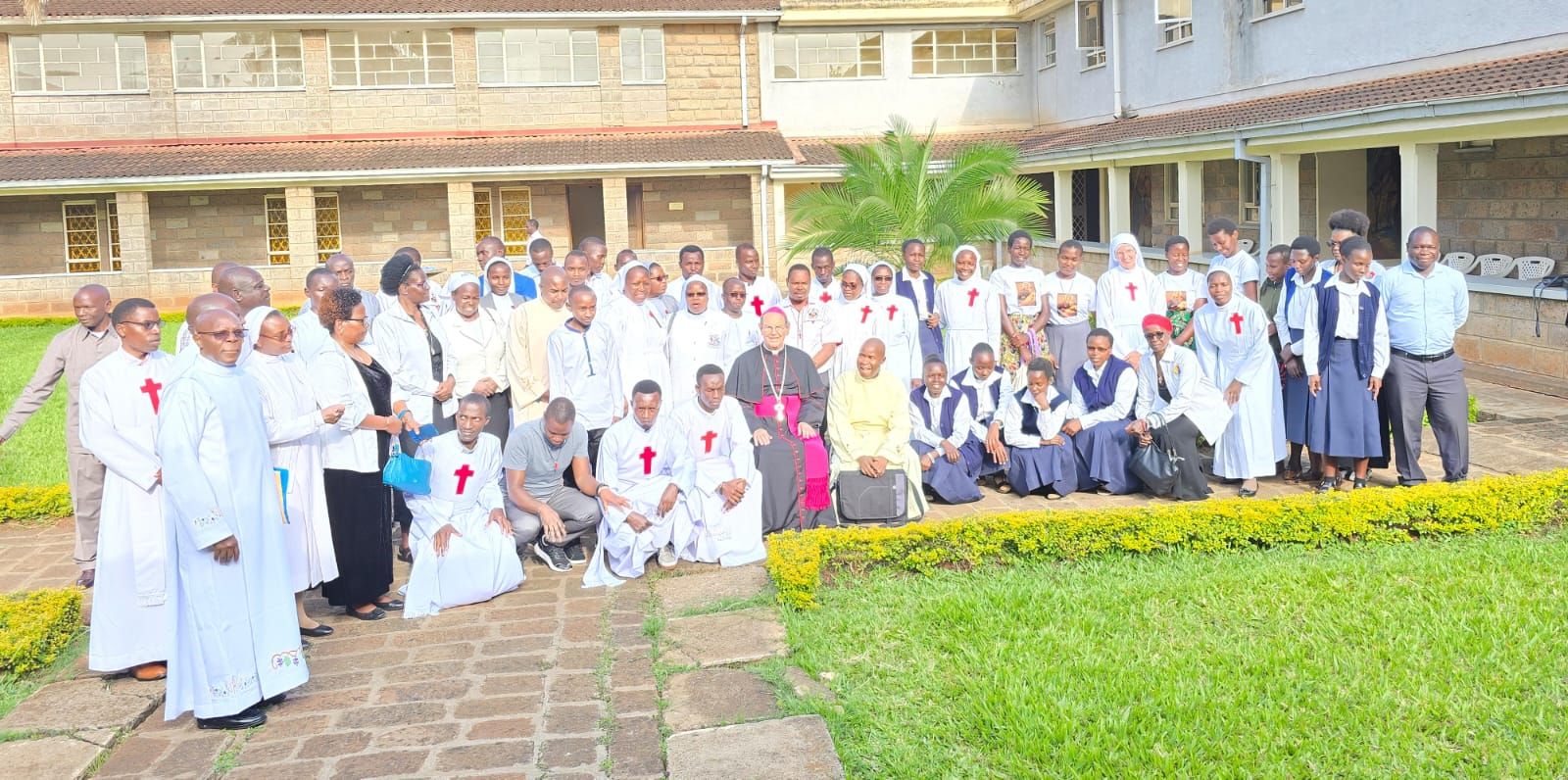
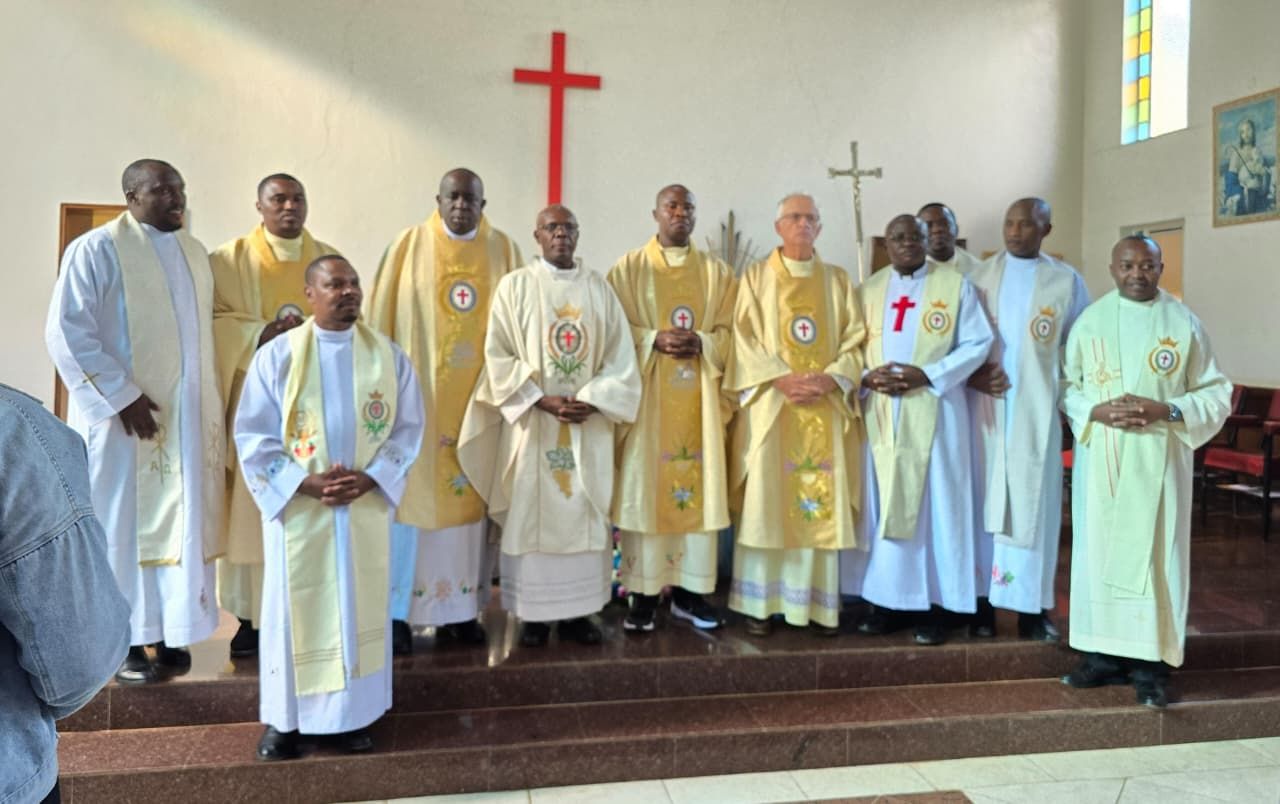
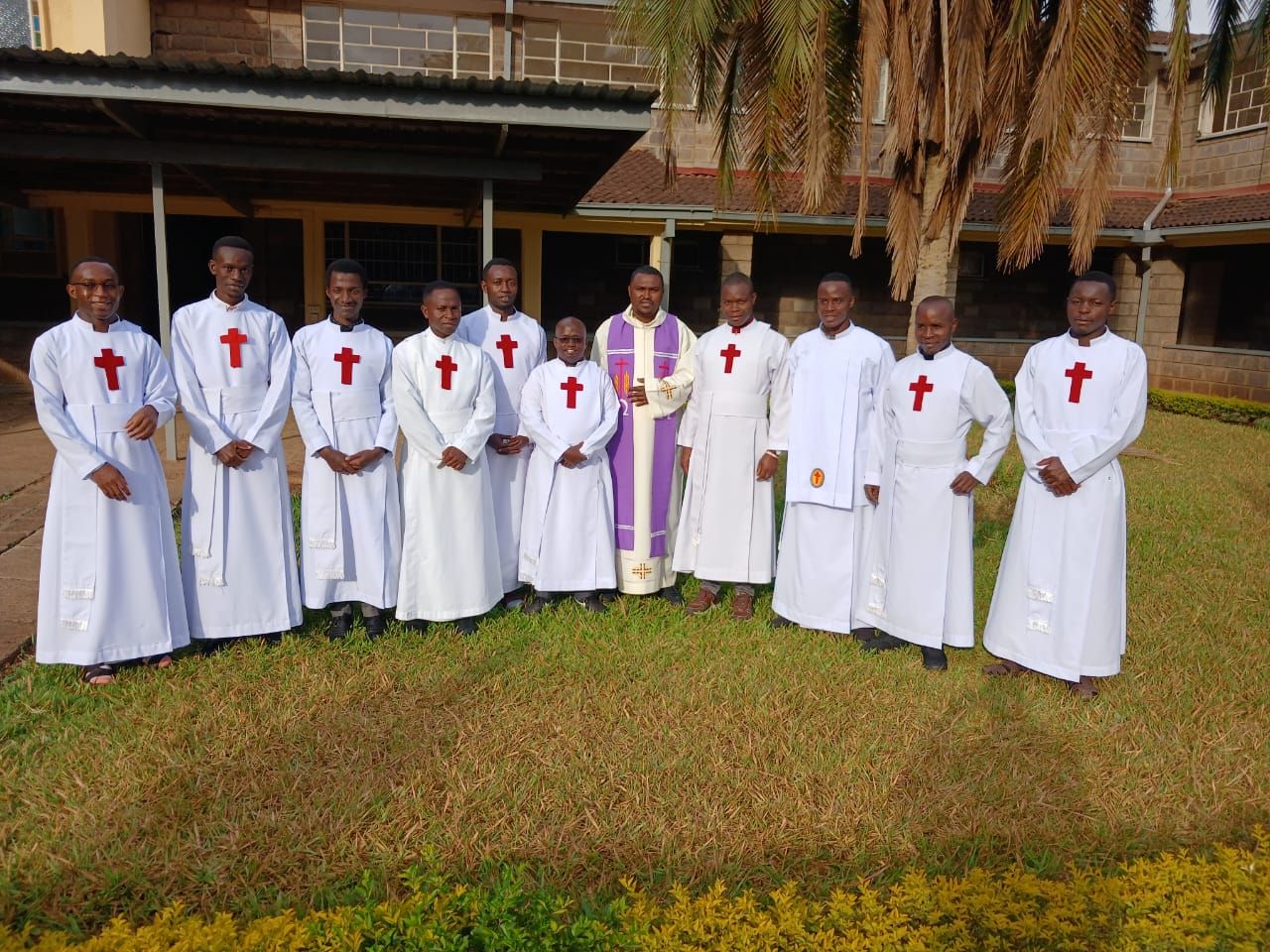
The Kenyan Delegation opened and closed the Camillian Jubilee year, 450 years after the conversion of St. Camillus.
Our Founder’s Birth
At nearly 60 years of age, Camilla Compelli de Laureto had a dream. She dreamed that the son she was carrying would one day wear the emblem of a cross upon his chest, leading other men that wore the same emblem. The thought of this cross instilled a great fear in her, as the cross was used in those times to signify men that had been condemned to death on the gallows.
With a deep-seated fear of her son’s future and the band he would one day lead, she gave birth to her son, Camillus, on May 25th, 1550. The joyous birth was unfortunately overshadowed by the lingering images his mother took away from her dream. The saintly woman died with anguish in her heart when her son was only thirteen.
Growing to become a strapping 6’6” tall, young Camillus was the terror of his townspeople. He followed his father Giovanni de Lellis, an army captain, into the adventurous and romantic career of mercenary on an Italian peninsula wracked with wars, from fighting with or against the French to Venice and skirmishes with the Turks.
St. Camillus’ Youth
Like many risk-seeking young soldiers, he became a gambler, and although his career was often lucrative, he just as often found himself in dire financial straits, even going so far as to literally lose his shirt. After one military engagement, wounded above the ankle in a skirmish with the Turk, he limped along the road back to his hometown with his father, who took ill along the way. They were received into care, but Camillus’ wound did not heal and infection moved into his foot. His father died, and the young giant, now on his own, fell in with a companion who liked gambling and rioting quite as much as Camillus did.
The pair of them had fallen on hard times, so much so that Camillus stopped at a local church to receive alms of food for himself and his companion along with the destitute from the parish. A devout local man seeing him there inquired why such a strapping young man should require alms, and Camillus answered that his troop had disbanded and he was down on his luck. The man asked Camillus to visit his home for some hospitality, and he would find him employment.
His suffering urged him to take his acquaintance up on the offer, but his companion mocked him, wondering why big, bad Camillus would ever want to cast off his freewheeling lifestyle. Camillus began to follow his companion out of town, but upon meeting two monks riding the other way on mules, decided to turn about and abandon his companion.
The Awakening
Camillus went to work at a Capuchin monastery, helping them with construction projects and driving their mules to trade goods. On one of these occasions, he went to get some wine, and a priest had a spiritual conversation with him that caused Camillus to become inflamed with the desire for conversion. He asked to be taken in among the Benedictines, but was rejected as not having the proper education. The year was 1575, Camillus was 25 years old.
Camillus found himself in Rome where his festering wound would still not heal. He was admitted into the famous Hospital of St. James, where he encountered Father Philip Neri, later also canonized. With no other means of paying for his treatment, Camillus began attending to the sick and the dying, both physically and spiritually.
Yet, unfortunately, Camillus still gambled and as a result, fought. His actions led to his discharge from St. James when he had healed to some degree. Camillus decided to find his way into the Benedictines and began studies with youth now far his juniors. He was teased mercilessly by his classmates, but he accepted this as he worked toward his education. The way now seemed cleared, but his wound reopened and caused him to seek medical treatment again.
400 Years Later
Camillus de Lellis died on July 14th, 1614, delighted to have seen his ministry spread throughout Italy. Pope Benedict XIV beatified Camillus in 1742 and canonized him in 1746, calling him the “Founder of a new school of charity.” This new school looked at the sick and dying in a new light.
Before and throughout the 1600s, frequent epidemics, including the Black Plague, decimated the “Servants of the Sick”, but the Order continued to grow throughout Europe and worldwide. “To serve the sick, even with danger to one’s own life” ultimately became the Order’s fourth vow. This relentless dedication, regardless of mortal danger, became the heart of the Order’s constitution and the Formula of Profession.
As of 2018, 1080 Camillians serve in 35 countries. They use the postnominal initials of M.I. (Ministri degli Infermi).
Founder of the Ministers of the Sick
Fifty Years of Serving the Sick, 1976–2026
The Beginnings
The arrival of the first stable group of Camillians in Kenya dates back to July 1976, while the official inauguration of the ministry was February 9, 1977, with the blessing of His Lordship Bishop Tiberius Mugendi of the Diocese of Kisii.
The first negotiations with the local Ordinary took place in the early 1970s between the Provincial Superior of the then Lombard-Venetian Province, Father Forsenio Vezzani, and the Bishop of the Diocese of Kisii, Bishop Maurice Otunga – who later became the first Cardinal in Kenya’s ecclesiastical history, and whose cause for beatification is underway – through the negotiations of Bishop Ercole Brocchieri, director of the diocesan weekly “La vita cattolica” of Cremona, Italy. It was he who had launched the proposal that the Camillians take over the Tabaka hospital, recently built by the German Misereor.
The hospital, which was initially intended to be merely a maternity ward under the care of the Sisters of the Blessed Virgin of Cremona, was the brainchild of Tabaka’s parish priest, Father Kees Witte, a Dutch missionary from the Mill Hill Congregation. Drawing on the presence of the Sisters of the Blessed Virgin, he wanted to address the area’s dire social and healthcare needs.
First Difficulties
The first attempt by the Camillians to settle in Tabaka dates back to 1975, with the pioneers Fr. Pio Rizzi, MI and Fr. Giuseppe Confalonieri, but it failed due to relationship difficulties with the hospital director, the Dutchman Dr. Vijffels.
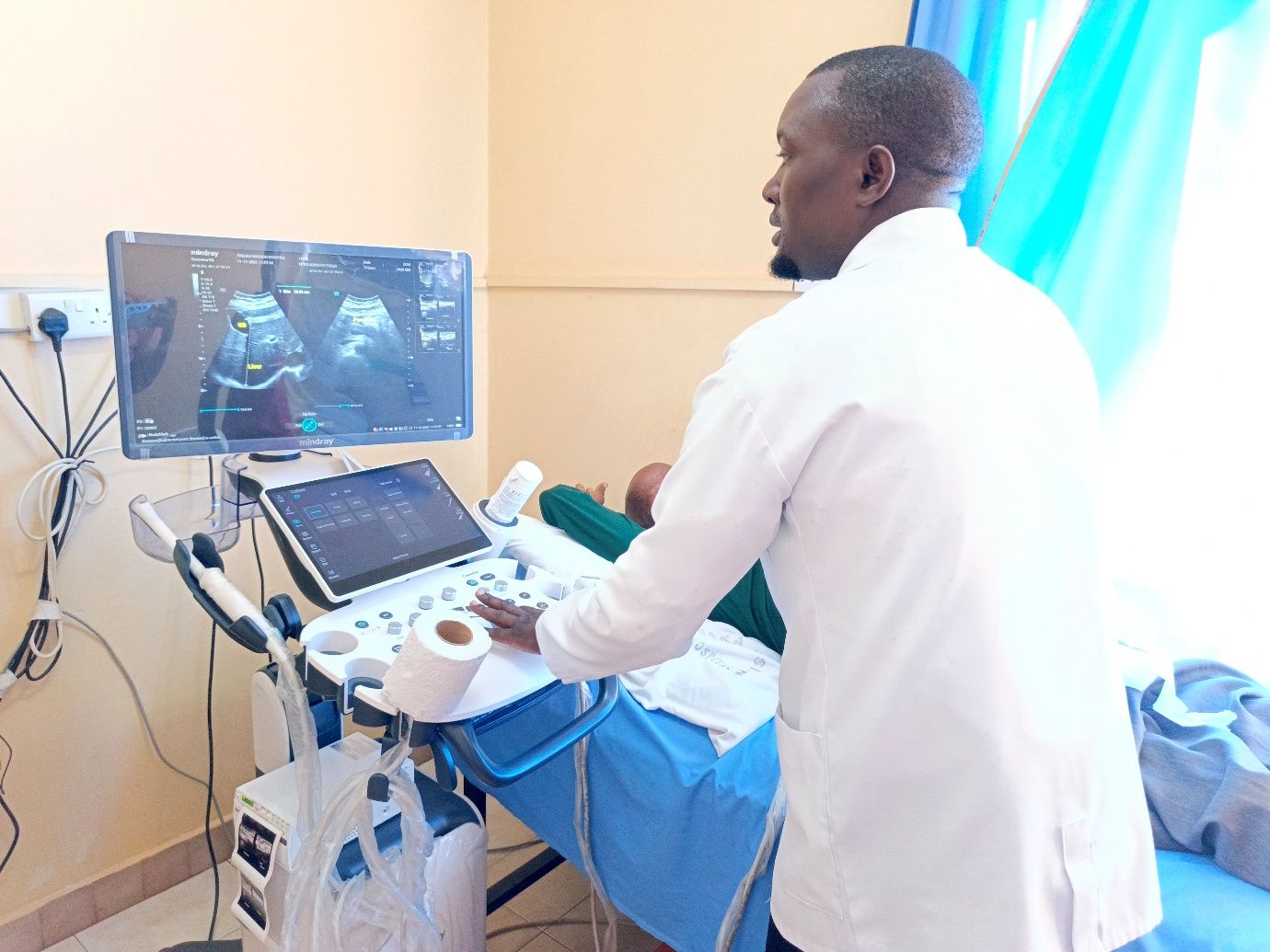
The second attempt, however, was successful when the director resigned. The Camillians faced several practical challenges, such as connecting electricity and water, and repairing the road, which became impassable during the rainy season. Although the hospital is run by the Camillians, it is owned by the Diocese of Kisii; our collaboration is governed by an agreement with the Bishop. From the beginning, the Camillians have been supported by a group of nuns, the Ministers of the Sick of St. Camillus. The Diocese of Cremona, through the Dr. Marini Association, supported the hospital with regular financial contributions.
Consolidation
New Italian forces supporting the first four pioneers – Father Francesco Spagnolo, Father Franco Avi, Brother Albano Balzarin and Father Fabio Zeni – enabled the workforce to increase. They are Father Giuseppe Confalonieri and Father Mario Cattaneo. Later, Brother Pietro Pedergnana and Brother Valentino Gastaldello, as well as Brother Gabriel Brady and Father Emilio Balliana, Brother Camillus McHugh and Father Giuseppe Proserpio, joined the team.
Emphasis was placed on primary care in the community, opening several mobile clinics. A significant contribution to the hospital’s growth was made by volunteers (particularly those provided by the Turin Medical Collaboration Committee), including doctors and nurses, and later also a couple of administrators from Milan. Meanwhile, the hospital was expanded with the addition of buildings (e.g. waterworks and an isolation ward).
Five Communities in the Delegation of Kenya
Each community is a home for Camillian religious and a base for ministry to the sick in its diocese.
Tabaka
Diocese of Kisii · one residence
Bolech House
Archdiocese of Nairobi · three residences
St. Camillus Seminary
Archdiocese of Nairobi · opened in 1986 and constituted as a community a few years later · two residences
Karungu
Diocese of Homa Bay · one residence
Mombasa
Archdiocese of Mombasa · opened on November 28, 2025
Where We Serve After 50 Years of Religious Life
Hospital Chaplaincy
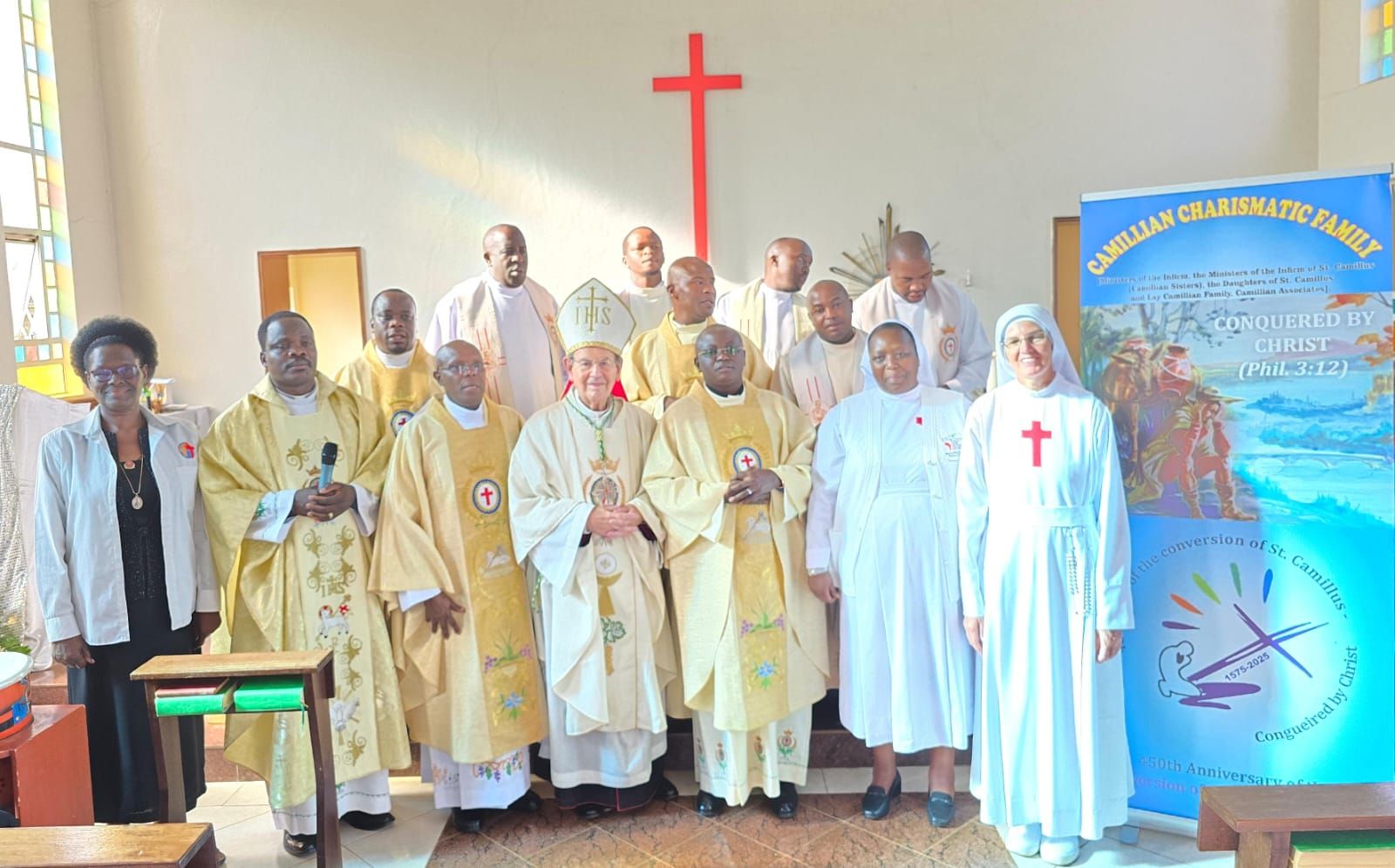
Pastoral care at The Nairobi Hospital, Mater Misericordiae Hospital, St. Mary’s Mission Hospitals (Nairobi and Nakuru) and Coast General Teaching and Referral Hospital, Mombasa.
Health Care Facilities
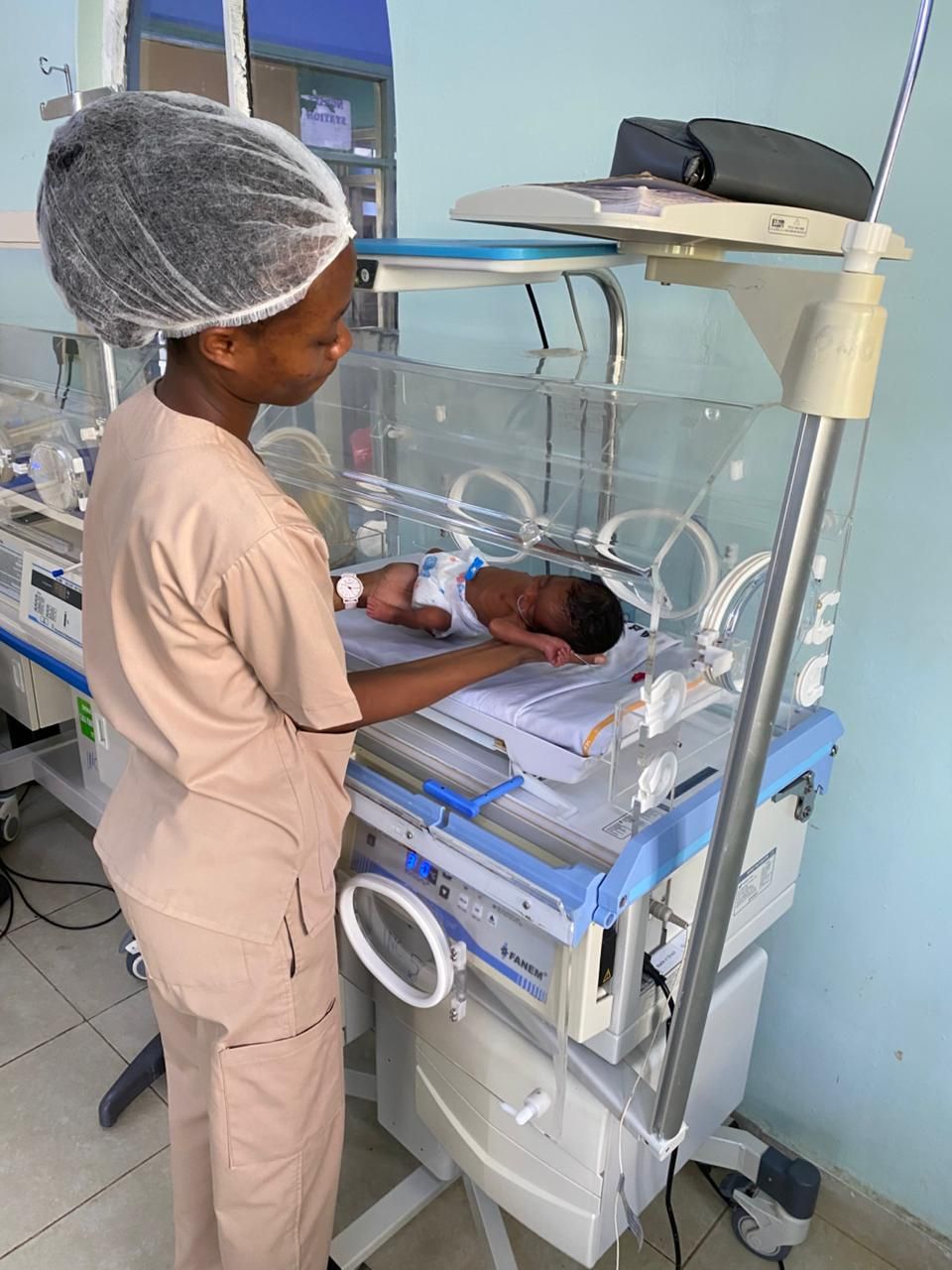
Tabaka Mission Hospital (Kisii) and St. Camillus Mission Hospital (Karungu).
Vulnerable Children
Dala Kiye Children Welfare Home in Karungu serves the most vulnerable children.
Parish Ministry
St. Peter, Kwihota and Mary Help of Christians, Ndundu (Archdiocese of Nairobi); St. Camillus, Nyamarambe (Diocese of Kisii); St. Camillus de Lellis, Rodi (Diocese of Homa Bay); and Junda, to be erected soon (Archdiocese of Mombasa).
CADIS Kenya
Camillian Disaster Services International (CADIS), which operated as the Camillian Task Force (CTF), is now a registered non-governmental organisation (NGO) serving vulnerable populations.
Clinical Pastoral Education
Training in pastoral care of the sick at Bolech House, Nairobi.
St. Camillus School of Nursing
Training nurses at Tabaka, Kisii.
Lay Camillians in Nairobi, Kisii and Homa Bay
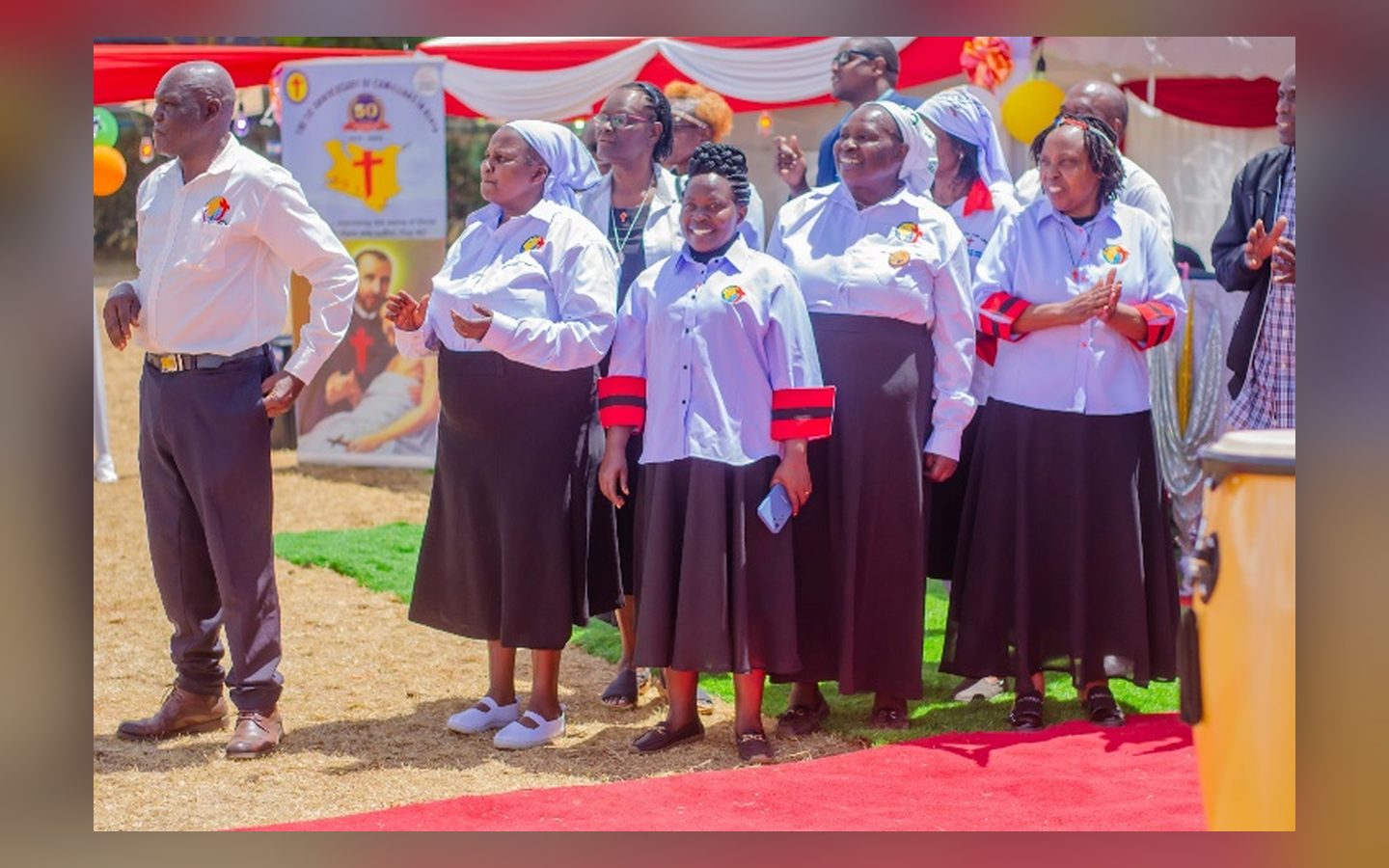
The Lay Camillian Family in Kenya actively operates in three counties, namely Nairobi, Kisii and Homa Bay. The LCF calls upon members to pray for the sick as a daily practice, individually, in homes and in groups. They also visit institutions such as hospitals, hospices, and homes for children and elderly people. Finally, they also support the work of CADIS Kenya.
Recently it was discovered that the Nairobi group was facing serious challenges, including inactive members, leaders resigning, a disconnect with the Camillians, a lack of accountability and a lack of commitment. The current spiritual assistant has been accompanying this group to restore their identity and mission. There are also advanced plans to integrate all the groups from other regions and establish a central leadership.
Our Theory of Change
The delegation’s strategic plan for the next three years revolves around this theory of change:
For this reason, the delegation council has chosen this theory of change to be its focus for the three-year period 2025–2028.